










China, the Only Winner: How Beijing Turned the Hormuz Crisis Into Leverage
A new Asia Group report argues that Donald Trump's Middle East gamble handed Beijing an energy cushion, a propaganda gift, and a strategic edge over every regional rival.
01 July 2026
There is a certain grim symmetry to it. The United States and Israel struck deep inside Iran; Iran answered by choking the world's most important oil chokepoint; and the country that emerged with the fewest bruises was the one that fired no shots and sailed no warships — China.
That is the central conclusion of a report published on Tuesday by the geopolitical consulting firm Asia Group, which examined how the closure of the strait of Hormuz rippled across the continent that depends on it most. The verdict is blunt: among Asia's major economies, Beijing is the sole clear winner.
The waterway that feeds a continent
The strait of Hormuz is not an abstraction on a map. Before Iran effectively sealed it, roughly 80 percent of the oil and nearly 90 percent of the liquefied natural gas passing through the passage was bound for Asian markets, along with a large share of other critical commodities. When that artery clamped shut, the exposed patient was Asia.
Iran moved to close the strait after the US and Israel launched joint strikes on 28 February, hitting government and military sites and killing the country's supreme leader, Ali Khamenei. The crisis that followed sent global energy prices soaring. Japan, South Korea, India, the emerging economies of south-east Asia — all found themselves scrambling for barrels that suddenly could not reach them.
China felt the same shock. It simply felt it less.
A cushion built on purpose
The reason is not luck. It is preparation, and the preparation was deliberate.
Beijing has long kept strategic energy reserves, and last year it exploited cheap prices to build them still higher. Crude imports rose from 11.1 million barrels a day to 11.6 million in 2025 — and, according to Erica Downs, a senior research scholar at the Centre on Global Energy Policy, more than 80 percent of that increase went straight into storage rather than into engines. By January, China was sitting on enough stockpiled crude to cover 104 days of imports at 2025 levels.
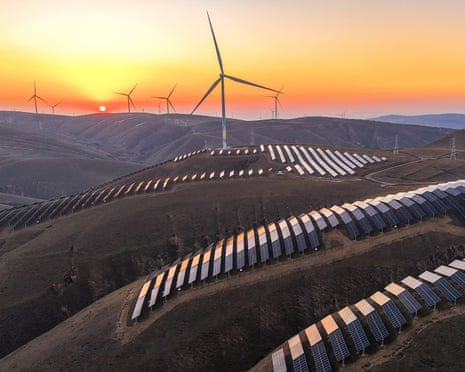
The Asia Group report put the same point in colder arithmetic: "With 1.4 terawatts of operating renewable capacity already online and a reported 90-110 days of crude import cover in reserve, China weathered the initial shock better than any regional peer."
That phrase — better than any regional peer — is the entire story compressed into six words.
The renewable juggernaut
The stockpile bought time. The other half of China's insulation is structural, and it is enormous.
Last year Beijing installed 315 gigawatts of new solar capacity — more than half of all the solar added on the planet. The year before, it added 277. The stated goal is to draw half of the country's energy from non-fossil sources by 2030, with wind and solar alone reaching 30 percent, up from 22 percent in 2025.
Coal still supplies more than half of China's energy, and no report pretends otherwise. But the trajectory is unmistakable: every gigawatt of domestic solar and wind is a barrel that Hormuz cannot hold hostage.
And here the crisis did something quietly generous for Beijing. As other governments watched the strait close and reached for the accelerator on their own clean-energy buildouts, they reached — inevitably — for Chinese hardware. Beijing dominates the global supply chain in solar and other clean technologies, and it has spent years pushing that production abroad at low prices, to the visible irritation of Western leaders anxious about their own industries.
The numbers moved accordingly. China's electric-vehicle exports jumped more than 110 percent in May year on year. Solar shipments in April rose 60 percent.
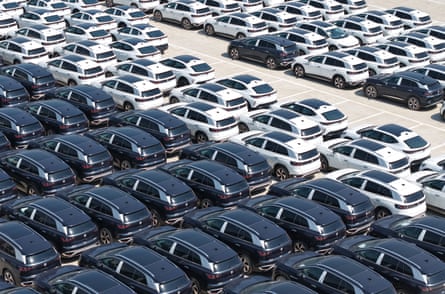
The world's panic became China's order book.
The story Beijing gets to tell
Energy security is one advantage. Narrative is another, and it may prove the more durable.
Beijing called for a ceasefire in the Middle East. When Trump visited in May and met Xi Jinping, he claimed the two powers were united in the search for a settlement. But the Asia Group report identifies the real prize on offer: "The crisis allows Beijing to cast the United States as the destabilising actor whose Middle East entanglements impose costs on the world."
That is a role China did not have to audition for. Washington wrote the script itself.
Not without risk
It would be too neat to declare Beijing untouchable, and the report's sources resist the temptation.
Drew Thompson, a senior fellow at the S. Rajaratnam School of International Studies in Singapore, cautioned against the reflex of scoring every American stumble as a Chinese point: "It's tempting to see any loss of credibility in the US as a benefit for China, but that's not necessarily the case for Beijing, which does not want to supplant Washington as a Middle East hegemon or provider of security for the region."
There is a sharper lesson closer to home. Wen-Ti Sung, a non-resident fellow with the Atlantic Council's Global China Hub, based in Taiwan, suggested the crisis might give Beijing pause on the question it thinks about most — because it laid bare just how treacherous it is to move ships through hostile waters. A strait that can be closed against Iran's enemies is a strait that can be closed against anyone, and the strategist watching Hormuz from Beijing surely also glances toward the strait of Taiwan.
Pain points, not existential threats
The report's closing judgment is the one worth keeping. Beijing, it concludes, "views the pain points not as existential threats, but as challenges to be managed and even opportunities to be exploited."
That sentence is the difference between a country caught in a crisis and a country reading one. Everyone in Asia absorbed the shock of the shuttered strait. Only China had spent years — quietly, methodically, with reserves and solar farms and export ports — arranging to absorb it best. When the waterway closed, that patience stopped looking cautious and started looking like strategy.


